Home Blog Page 9

Legal, Taxes & Financial Planning for Digital Nomads

0

Remote work is awesome—but when it comes to legal paperwork and taxes, it can feel like you’re trying to decode hieroglyphics with a broken pencil. Whether you’re setting up a business abroad or juggling international bank accounts, this guide will equip you with the know-how to keep your financial affairs as smooth as your Wi-Fi connection.

As part of our comprehensive Digital Nomad Guide, this article is just one piece of the puzzle—if you’re looking for more insights on Digital Nomad Visas, legal matters, productivity tricks, income boosters, safety smarts, and lifestyle hacks, be sure to explore:
Digital Nomad Visa Guide: The Ultimate Guide to Digital Nomad Visas & Remote Work
Your passport to global remote work—get all the insider visa tips here!

Productivity Hacks: Remote Work Productivity Hacks for Digital Nomads
Transform distractions into productivity power-ups and work smarter, not harder.

Side Hustles & Passive Income: Side Hustles & Passive Income Strategies for Digital Nomads
Turn your passion into profit and diversify your income streams on the go.

Travel Safety & Healthcare: Travel Insurance, Safety & Healthcare for Digital Nomads
Discover essential tips for travel insurance, healthcare, and safety worldwide.

Alternative Living & Communities: Alternative Living & Digital Nomad Communities
Explore unique housing options and join a vibrant, global community of digital nomads.
Introduction

The digital nomad lifestyle lets you work from a beach, a bustling city, or even a mountaintop (if the Wi-Fi holds). However, beyond the selfies and coconut water lies a maze of legal and tax obligations that can trip up even the savviest expat. In this guide, we break down how to:

  • Set up your business in popular nomad hubs.
  • Understand the tax incentives that can save you a pretty penny.
  • Navigate international banking and accounting with confidence.

Grab a cup of coffee (or something stronger if you prefer) and let’s turn legal and tax challenges into a smooth ride.


Setting Up Your Business Abroad

As a digital nomad, having your own business or working as a freelancer is often the key to financial independence. But where do you start? Here’s what you need to know:

Establishing Your Business Structure

  • Choosing the Right Model:
    • Sole proprietorship, LLC, or registering as a freelancer? Your choice depends on where you plan to live and how much protection you need.
  • Local Registration:
    • In countries like Portugal or Estonia, you can benefit from friendly regulations such as Portugal’s Non-Habitual Resident (NHR) scheme or Estonia’s e-Residency program.
    • 🔗 Related: Estonia’s E-Residency Guide

Legal Requirements

  • Document Preparation:
    • Ensure you have all the necessary documents—passport copies, proof of income, and business plans.
    • Pro Tip: Digital copies are your best friend; scan, save, and back them up!
  • Understanding Local Laws:
    • Every country has its own set of rules. For example, Estonia offers an entirely digital process for registering your business, while Germany may require notarized documents.
  • Seeking Professional Advice:
    • When in doubt, consult with a local legal advisor who understands expat and freelancer law.
    • This can save you from a world of headaches (and possibly fines).

Understanding Tax Incentives

Taxes might be the least fun part of your nomad journey—but they can also be your secret weapon if you play your cards right.

Comparing Tax Benefits

  • Portugal’s NHR Scheme:
    • Enjoy a potential 0% tax rate on foreign income for up to 10 years. This is a huge win if you’re earning internationally.
  • Georgia’s Tax-Free Threshold:
    • Earn up to $155,000 per year tax-free—a perfect option if you want to keep more of your earnings.
  • Spain’s Reduced Tax Rate for New Residents:
    • New residents can benefit from a lower tax rate (around 15%) for a few years, easing the transition.
  • Dubai’s Zero Income Tax:
    • If you can handle the luxury price tag, Dubai offers a tax-free environment that’s hard to beat.

Key Considerations

  • Plan Ahead:
    • Understand whether you’ll be taxed in your home country, your new country, or both. Many countries have tax treaties to avoid double taxation.
  • Keep Detailed Records:
    • Track all income and expenses meticulously. Digital tools like cloud-based accounting software can help you stay organized.
  • Hire a Tax Consultant:
    • Even if you’re a DIY nomad, a one-time consultation with a tax professional can clarify complex international tax laws.

International Banking & Accounting

Managing money across borders can be tricky. Here’s how to make it simpler:

Choosing the Right Banking Solutions

  • Multi-Currency Accounts:
    • Services like Wise or Revolut allow you to hold, send, and receive money in multiple currencies.
    • This is especially useful if you’re earning in one currency and spending in another.
  • Local Banking Options:
    • Some countries offer easy account setups for foreigners. For instance, Germany’s streamlined process for freelancers can be beneficial if you plan to stay in the EU long term.
  • Digital-First Banks:
    • Banks that operate primarily online can offer lower fees and more flexible services, perfect for the nomadic lifestyle.

Accounting Best Practices

  • Cloud-Based Software:
    • Tools like Xero or QuickBooks keep your books balanced and accessible from anywhere.
  • Expense Tracking:
    • Always record expenses related to your business—these can often be deducted, reducing your tax burden.
  • Regular Financial Reviews:
    • Set aside time each month to review your accounts and ensure everything is in order. This helps catch issues before they become costly mistakes.

Tips for Smooth Transactions

  • Currency Conversion:
    • Use a currency conversion app to stay on top of fluctuating exchange rates.
  • Maintain Separate Accounts:
    • Keep your personal and business finances separate to simplify accounting and tax filings.
  • Automate Where Possible:
    • Automate bill payments and transfers to minimize the risk of human error.

Must have in Legal, Taxes & Financial Planning for Digital Nomads

Conclusion & Call-to-Action

Navigating the legal, tax, and financial aspects of a digital nomad lifestyle might seem like an uphill battle, but with the right tools, planning, and professional guidance, you can turn these challenges into opportunities. From setting up your business in expat-friendly countries to taking full advantage of tax incentives and choosing the best banking solutions, every step you take is a stride toward financial freedom on your terms.

👉 “Have you encountered any legal or tax challenges while living the nomad life? Share your stories and tips in the comments below, and don’t forget to check out The Ultimate Guide to Digital Nomad Visas & Remote Work for more insights!”
The Ultimate Guide to Digital Nomad Visas & Remote Work

The dream of sipping espresso in a Parisian café while answering emails or taking Zoom calls from a Bali beachfront is no longer just for Instagram influencers. Remote work is here to stay, and digital nomad visas are your golden ticket to legally working from paradise. With over 40+ countries now offering digital nomad visas, the options are endless—from high-tech cities with blazing-fast Wi-Fi to tropical retreats where a coconut costs less than your morning latte.

As part of our comprehensive Digital Nomad Guide, if you’re ready to unlock the secrets of a top-notch Digital Nomad Visa and master every aspect of living and working remotely, we’ve got you covered. Our in-depth guides offer expert insights on legal, tax, and financial planning, productivity hacks, income-boosting side hustles, essential travel insurance and safety measures, and creative alternative living options—all designed to help you build your dream nomadic lifestyle.

Legal & Tax Planning: Legal Taxes Financial Planning for Digital Nomads
Say goodbye to tax headaches with savvy legal and financial planning tips.

Productivity Hacks: Remote Work Productivity Hacks for Digital Nomads
Transform distractions into productivity power-ups and work smarter, not harder.

Side Hustles & Passive Income: Side Hustles & Passive Income Strategies for Digital Nomads
Turn your passion into profit and diversify your income streams on the go.

Travel Safety & Healthcare: Travel Insurance, Safety & Healthcare for Digital Nomads
Discover essential tips for travel insurance, healthcare, and safety worldwide.

Alternative Living & Communities: Alternative Living & Digital Nomad Communities
Explore unique housing options and join a vibrant, global community of digital nomads.

But where should you set up your next home office? We’ve rounded up the best digital nomad visa countries based on internet speed, cost of living, lifestyle, and tax benefits. Pack your laptop, power bank, and noise-canceling headphones—let’s find your perfect destination!

1. Portugal – The OG Nomad Hotspot

Portugal-–-The-OG-Nomad-Hotspot

Visa Type: Portugal Digital Nomad Visa
Official Application: 🔗 Apply for Portugal Digital Nomad Visa

Why Portugal?

  • Ranked #1 for digital nomads in multiple surveys
  • ✅ Lisbon & Porto boast some of Europe’s fastest public Wi-Fi (100+ Mbps)
  • ✅ Attractive 10-year non-habitual resident (NHR) tax scheme
  • ✅ Buzzing co-living hubs for networking (work hard, play harder!)

Key Facts:

  • Income: €3,280/month
  • Duration: 1 year (renewable up to 5 years)
  • Fees: €83 + €72
  • Tax: 0% on foreign income (conditions apply)
  • Processing: 3–6 months

Downsides:

  • ❌ Bureaucratic delays (like waiting for your espresso to cool)
  • ❌ Rising rental prices in Lisbon (climbing faster than your caffeine levels)

Related Resources:

Must have in Portugal:

Portugal Visa Application Tips:

  • 📝 Prepare all your financial documents early (avoid last-minute surprises!)
  • 📝 Keep digital copies of every submission

👉 “Have you experienced the Portuguese nomad lifestyle? Share your funniest moments and tips in the comments!”


2. Brazil – The Tropical Nomad Retreat

Brazil – The Tropical Nomad Retreat

Visa Type: Brazil Digital Nomad Visa
Official Application: 🔗 Apply for Brazil Digital Nomad Visa

Why Brazil?

  • ✅ Breathtaking beaches and a vibrant, samba-infused city life
  • ✅ Growing remote work communities in Florianópolis & São Paulo
  • ✅ Low cost of living compared to Europe/North America
  • ✅ Warm, sun-soaked climate all year—no winter blues here!

Key Facts:

  • Income: $1,500/month or $18,000 in savings
  • Duration: 1 year (renewable)
  • Fees: $100
  • Tax: No tax on foreign income for the first year
  • Processing: 1–3 months

Downsides:

  • ❌ Safety concerns in certain areas—stick with well-known nomad zones
  • ❌ Urban traffic that beats even the rhythm of a samba

Related Resources:

Must have in Brazil:

Brazil Visa Application Tips:

  • 📝 Double-check safety ratings for neighborhoods
  • 📝 Secure your valuables during commutes

👉 “What’s your favorite digital nomad spot in Brazil? Share your stories and funny mishaps below!”


3. Georgia – The Tax-Free Nomad Haven

Georgia – The Tax-Free Nomad Haven

Visa Type: Remotely from Georgia Visa
Official Application: 🔗 Apply for Remotely from Georgia Visa

Why Georgia?

  • ✅ Enjoy tax-free income up to $155,000 per year
  • ✅ Extremely affordable cost of living
  • ✅ Free 365-day visa for most nationalities—zero fees, zero hassle!
  • ✅ Booming startup scene in Tbilisi & Batumi

Key Facts:

  • Income: $2,000/month
  • Duration: 1 year (renewable)
  • Fees: Free
  • Tax: No tax on foreign income under $155,000
  • Processing: Instant (Visa-Free for Most)

Downsides:

  • ❌ Limited international banking options—bring a reliable travel-friendly card
  • ❌ Winters can be chilly; a heated jacket is a smart buy!

Related Resources:

Must have in Georgia:

Georgia Visa Application Tips:

  • 📝 Verify all banking and documentation details before applying
  • 📝 Monitor seasonal weather updates

👉 “Have you tasted Georgian hospitality? Tell us your experiences and tips!”


4. Malaysia – The Underrated Nomad Paradise

Malaysia – The Underrated Nomad Paradise

Visa Type: DE Rantau Nomad Visa
Official Application: 🔗 Apply for DE Rantau Nomad Visa

Why Malaysia?

  • ✅ Kuala Lumpur is emerging as one of Asia’s top digital nomad hubs
  • ✅ Enjoy an affordable lifestyle with modern amenities
  • ✅ English is widely spoken—no language barrier blues
  • ✅ World-class internet speeds for seamless connectivity

Key Facts:

  • Income: $2,000/month
  • Duration: 1 year (renewable up to 2 years)
  • Fees: $225
  • Tax: No tax on foreign-sourced income
  • Processing: 1–2 months

Downsides:

  • ❌ The tropical heat and sudden downpours may catch you off guard
  • ❌ High humidity demands extra care for your gadgets

Related Resources:

Must have in Malaysia:

Malaysia Visa Application Tips:

  • 📝 Organize digital and physical copies of all documents
  • 📝 Monitor local weather patterns and plan accordingly

👉 “Share your best tips for surviving the tropical heat in Malaysia in the comments below!”


5. Barbados – The Caribbean Dream for Remote Workers

Barbados – The Caribbean Dream for Remote Workers

Visa Type: Barbados Welcome Stamp
Official Application: 🔗 Apply for Barbados Welcome Stamp

Why Barbados?

  • ✅ Embrace laid-back island life with world-class beaches
  • ✅ Enjoy year-round warm weather and a vibrant Caribbean culture
  • ✅ English is the official language—simplicity at its best
  • ✅ Many nomad-friendly zones with high-speed internet connectivity

Key Facts:

  • Income: $50,000/year
  • Duration: 1 year (renewable)
  • Fees: $2,000
  • Tax: No local income tax for remote workers
  • Processing: 1–2 weeks

Downsides:

  • ❌ Higher cost of living compared to some Asian/Latin American destinations
  • ❌ Limited variety in coworking spaces—research is key!

Related Resources:

Must have in Barbados:

Barbados Visa Application Tips:

  • 📝 Research coworking options before applying
  • 📝 Double-check your travel documents for accuracy

👉 “Planning your Caribbean escape? Share your top Barbados tips in the comments!”


6. Germany – Europe’s Freelancer Hub

Germany – Europe’s Freelancer Hub

Visa Type: Germany Freelance Visa (Freiberufler)
Official Application: 🔗 Apply for Germany Freelance Visa

Why Germany?

  • ✅ Enjoy top-tier infrastructure and efficient public transport
  • ✅ Thrive in dynamic startup scenes in Berlin and Munich
  • ✅ Access one of Europe’s strongest economies
  • ✅ Benefit from affordable healthcare and robust social security

Key Facts:

  • Income: €1,200–€3,000/month (varies by state)
  • Duration: 3 months (convertible to a 3-year residence permit)
  • Fees: €100–€150
  • Tax: Must register as a freelancer and pay local taxes
  • Processing: 2–4 months

Downsides:

  • ❌ Complex bureaucracy—prepare for a mountain of paperwork
  • ❌ Relatively high taxes compared to other destinations

Related Resources:

Must have in Germany:

  • 💳 Best German Banking Service – For smooth EU account setup
  • 📒 Productivity Planner – To manage strict deadlines
  • 🎧 Noise-Canceling Headphones – To focus in busy coworking spaces
  • 🏢 Co-Working Space Membership – Top-rated in Berlin/Munich
  • 🧾 Freelancer Tax Management Software – Streamline your accounting

Germany Visa Application Tips:

  • 📝 Gather and organize all required documents early
  • 📝 Consider hiring a local consultant for complex tax matters

👉 “Thriving in Germany’s freelancer scene? Share your success tips in the comments!”


7. Thailand – The Budget-Friendly Digital Nomad Hub

Thailand – The Budget-Friendly Digital Nomad Hub

Visa Type: Long-Term Resident (LTR) Visa
Official Application: 🔗 Apply for Thailand LTR Visa

Why Thailand?

  • Chiang Mai: One of the cheapest digital nomad hubs on the planet
  • ✅ Bangkok: A high-tech metropolis with vibrant coworking spaces
  • ✅ Dreamy islands offering the perfect work-life balance
  • ✅ Superfast internet speeds (225 Mbps average) to keep you streaming and working

Key Facts:

  • Income: $80,000/year (LTR) or $1,500/month (Tourist extensions)
  • Duration: 10 years (LTR) or 6 months–1 year (other options)
  • Fees: $600 (LTR)
  • Tax: 17% flat rate for highly skilled professionals
  • Processing: 1–2 months

Downsides:

  • ❌ Changing visa rules can be as unpredictable as Thai weather
  • ❌ Bangkok traffic might test your patience (and your playlist!)

Related Resources:

Must have in Thailand:

  • 🔋 Best Power Bank – To keep your devices charged during long café sessions
  • 💻 Lightweight Laptop Stand – For ergonomic setups anywhere
  • 🌐 VPN for Thailand – To bypass local content restrictions
  • 🛡 International Travel Insurance – For unexpected travel mishaps
  • ❄️ Portable Fan or Cooling Towel – To beat the tropical heat

Thailand Visa Application Tips:

  • 📝 Organize required documents (both digital and hard copies)
  • 📝 Stay updated on visa rule changes via official channels

👉 “Have you experienced Thai magic? Share your funniest travel moments in the comments!”


8. Spain – Sun, Sangria & Super Fast Wi-Fi

Spain – Sun, Sangria & Super Fast Wi-Fi

Visa Type: Spain Digital Nomad Visa
Official Application: 🔗 Spain Official Visa Info

Why Spain?

  • ✅ Barcelona ranks as one of the top digital nomad cities
  • ✅ Enjoy affordable rent outside major centers like Madrid
  • ✅ Lower living costs than in neighboring Germany or France
  • ✅ Benefit from a 15% tax rate for new residents earning under €600,000

Key Facts:

  • Income: €2,520/month
  • Duration: 1 year (renewable up to 5 years)
  • Fees: Around €75–€80
  • Tax: 15% for new residents
  • Processing: 2–6 months

Downsides:

  • ❌ Government paperwork can be as slow as a siesta
  • ❌ Administrative delays may test your patience

Related Resources:

Must have in Spain:

  • 🌐 Best VPN for Remote Workers – For seamless access to region-restricted content
  • ⌨️ Ergonomic Travel Keyboard – For comfortable, extended typing sessions
  • 🎒 Lightweight Nomad Backpack – Ideal for mobility and adventure
  • 📠 Portable Document Scanner – To digitize paperwork quickly

Spain Visa Application Tips:

  • 📝 Ensure certified translations for all documents
  • 📝 Keep a detailed checklist of your application process

👉 “What’s your secret to conquering Spanish bureaucracy? Share your tips in the comments!”


9. Dubai – The Tax-Free Nomad Paradise

Dubai – The Tax-Free Nomad Paradise

Visa Type: Dubai Virtual Work Visa
Official Application: 🔗 UAE Visa & Emirates ID

Why Dubai?

  • ✅ Enjoy a tax-free lifestyle—no personal income tax means more savings
  • ✅ World-class infrastructure and luxurious living standards
  • ✅ One of the safest cities globally
  • ✅ Super-fast internet and state-of-the-art digital services

Key Facts:

  • Income: $3,500/month
  • Duration: 1 year (renewable)
  • Fees: $287
  • Tax: No personal income tax
  • Processing: 2–4 weeks

Downsides:

  • ❌ High cost of living may require a heavier wallet
  • ❌ Strict content regulations can be a buzzkill for some users

Related Resources:

Must have in Dubai:

  • 🔐 Best VPN for Dubai – Essential for bypassing local restrictions
  • 🏢 Luxury Coworking Membership – Access premium workspaces
  • 🌍 International Travel Insurance – Mandatory for visa compliance
  • 📶 Portable Wi-Fi Hotspot – To ensure constant connectivity
  • 💱 Currency Conversion App Subscription – Manage AED expenses effortlessly

Dubai Visa Application Tips:

  • 📝 Gather all necessary documents before starting the online application
  • 📝 Stay alert for local regulatory changes via trusted news sources

👉 “If you’ve experienced Dubai’s luxury lifestyle as a digital nomad, share your insider tips in the comments!”


10. Indonesia – Bali’s Digital Nomad Haven

Indonesia – Bali’s Digital Nomad Haven

Visa Type: Second Home Visa
Official Application: 🔗 Indonesia Immigration

Why Indonesia?

  • ✅ Bali is synonymous with digital nomad paradise
  • ✅ Low cost of living paired with a high-quality, relaxed lifestyle
  • ✅ Abundant coworking spaces and beachfront offices
  • ✅ Rich cultural heritage and a warm, welcoming expat community

Key Facts:

  • Income: $140,000 in savings
  • Duration: 5 years
  • Fees: $1,500
  • Tax: No tax on foreign-sourced income
  • Processing: 1–3 months

Downsides:

  • ❌ Traffic congestion and stricter visa requirements can be challenging
  • ❌ Occasional power outages—keep that portable power bank handy!

Related Resources:

Must have in Indonesia:

Indonesia Visa Application Tips:

  • 📝 Ensure all travel documents are up-to-date
  • 📝 Research local coworking spots before arrival

👉 “Bali lovers, what’s your secret for balancing work and paradise? Share your experiences below!”


11. Costa Rica – The Pura Vida Lifestyle

Costa Rica – The Pura Vida Lifestyle

Visa Type: Rentista Visa
Official Application: 🔗 Costa Rica Immigration

Why Costa Rica?

  • ✅ Embrace the pura vida lifestyle amid stunning beaches and lush rainforests
  • ✅ Enjoy an affordable cost of living compared to the US and Europe
  • ✅ Frequently ranked as one of the happiest countries in the world
  • ✅ Benefit from a robust healthcare system for expats

Key Facts:

  • Income: $2,500/month
  • Duration: 2 years (renewable)
  • Fees: $250
  • Tax: No tax on foreign-sourced income
  • Processing: 1–3 months

Downsides:

  • ❌ Infrastructure in rural areas can be unreliable
  • ❌ High humidity may challenge your electronics—protect them well!

Related Resources:

Must have in Costa Rica:

Costa Rica Visa Application Tips:

  • 📝 Organize and scan all required documents
  • 📝 Follow local guidelines meticulously

👉 “What’s your favorite pura vida moment in Costa Rica? We’d love to hear your story!”


12. Estonia – Europe’s E-Residency Pioneer

Estonia – Europe’s E-Residency Pioneer

Visa Type: Estonia Digital Nomad Visa
Official Application: 🔗 Estonian Migration and Citizenship Board

Why Estonia?

  • ✅ The first country to introduce e-Residency—pioneering digital bureaucracy!
  • ✅ Enjoy super-fast internet and a digital-first society
  • ✅ Lower living costs than Western Europe without sacrificing quality
  • ✅ Simplified company setup for entrepreneurial nomads

Key Facts:

  • Income: €3,504/month
  • Duration: 1 year (renewable)
  • Fees: €100–€120
  • Tax: 20% on distributed profits (corporate tax)
  • Processing: 2–4 months

Downsides:

  • ❌ Cold winters may leave you shivering—pack your thermal gear!
  • ❌ A smaller nomad community might mean fewer local meetups

Related Resources:

Must have in Estonia:

  • 📅 Best Productivity Planner – Stay organized in Estonia’s efficient work culture
  • 🧣 Thermal Travel Gear – Essential for those frosty months
  • 🏢 Top Coworking Space Membership – Network with local startup founders
  • 📱 Reliable International SIM Card – For uninterrupted connectivity
  • 💼 E-Residency Consultancy Service – Simplify your application process

Estonia Visa Application Tips:

  • 📝 Prepare digital and physical copies of all documents
  • 📝 Monitor the e-residency portal for updates

👉 “Digital pioneers, share your experiences with Estonia’s e-Residency in the comments!”


Updated Comparison Table: Best Digital Nomad Visa Countries

CountryIncome RequirementVisa DurationTax PerksProcessing Time & Ease
Portugal€3,280/month1 year (renewable up to 5 years)0% on foreign income (conditions apply)3–6 months
Brazil$1,500/month or $18,000 in savings1 year (renewable)No tax on foreign income (first year)1–3 months
Georgia$2,000/month1 year (renewable)No tax on foreign income (< $155k)Instant (Visa-Free for Most)
Malaysia$2,000/month1 year (renewable up to 2 years)No tax on foreign-sourced income1–2 months
Barbados$50,000/year1 year (renewable)No local income tax1–2 weeks
Germany€1,200–€3,000/month3 months (convertible to 3-year residence permit)Must register as freelancer; pay local taxes2–4 months
Thailand$80,000/year (LTR) or $1,500/month (Tourist)10 years (LTR) or 6 months–1 year (other options)17% flat tax rate (for LTR Visa)1–2 months
Spain€2,520/month1 year (renewable up to 5 years)15% for new residents2–6 months
Dubai$3,500/month1 year (renewable)No personal income tax2–4 weeks
Indonesia$140,000 in savings5 yearsNo tax on foreign-sourced income1–3 months
Costa Rica$2,500/month2 years (renewable)No tax on foreign-sourced income1–3 months
Estonia€3,504/month1 year (renewable)20% on distributed profits (corporate tax)2–4 months

Bonus Countries Table that includes additional digital nomad-friendly destinations with key visa details, perks, and processing information. These bonus options complement our main list and provide extra choices for digital nomads seeking new adventures.

CountryVisa TypeMinimum Income RequirementVisa DurationKey PerksProcessing Time & Ease
MexicoTemporary Resident Visa~$2,500/month (or equivalent savings)1 year (renewable up to 4 years)Affordable living, vibrant culture, excellent climate1–2 months
ColombiaDigital Nomad Visa (Pilot Program)~$2,000/month (estimated)1 year (renewable)Low cost of living, emerging tech scene, diverse culture1–2 months (estimated)
New ZealandRemote Worker Visa~NZD $4,000/month (approx.)1 year (renewable)Scenic landscapes, high quality of life, safe environment2–3 months
IcelandWork in Iceland Visa~€3,500/month (approx.)6 months (extendable)Unique natural beauty, robust social support, modern amenities1–2 months
VietnamTemporary Resident Card~$1,500/month (approx.)1 year (renewable)Rapidly growing expat community, affordable lifestyle1–2 months

*Note: Some details (especially for emerging visa programs like Colombia’s) are based on current estimates and may evolve over time. Always verify with official sources.

Final Thoughts

Each country in this guide offers its unique blend of benefits and challenges for the modern digital nomad. Whether you’re chasing tax-free income in Dubai, vibrant culture in Brazil, or the digital-first lifestyle of Estonia, there’s a perfect match waiting for you.

👉 “So, where’s your next home office? Drop your laptop, passport, and a comment sharing your dreams, experiences, and favorite destinations. And don’t forget to subscribe for the latest updates on visa policies, remote work tips, and exclusive affiliate deals!”

🚀 Pro Tip: Always check the official government websites for the latest visa rules before applying—adventure awaits, and it’s just a visa away!

Setting Up a Proxy Server on Your Router: Step-by-Step Guide

0

Ever wished your router could do more to protect your digital life? A proxy server might just be the upgrade you’ve been looking for. Far from a fleeting fix, this tech-savvy tool offers a robust way to enhance your router’s security, boost its performance, and even save you a few bucks—all with a dash of geeky charm. In this article, we’ll unpack what a proxy server does, why it’s a game-changer for your router, and how to set one up. So, grab your favorite beverage, and let’s dive into the world of smarter, safer browsing!

Think of a proxy server as your router’s trusty sidekick—like a bouncer at a digital club. It stands between your devices and the wild internet, deciding who gets in and who stays out. When you browse, your traffic flows through the proxy first, masking your IP address and shielding your identity from prying eyes. It’s not just about hiding, though—proxies can also cache frequently visited sites, speeding up access like a well-oiled shortcut. For your router, this means a smoother, more secure connection across all your devices, without the hassle of configuring each one separately.

A proxy server for a router acts as an intermediary between your device and the internet. By routing your traffic through a proxy, all requests to access websites and services are first processed by the proxy server before reaching their destination. Similarly, responses from these websites are returned to the proxy server and then forwarded to your device.

Why Configure a Proxy Server on Your Router?

  1. Traffic Management
    Proxy servers can optimize internet traffic by caching frequently accessed data. This speeds up access to websites and reduces the load on your internet connection.
  2. Enhanced Security
    A proxy can increase your network’s security by masking your IP address, making your online activity more anonymous and protecting you from potential threats.
  3. Content Filtering
    Proxies can restrict access to specific online resources, which is particularly useful in households or educational institutions to manage internet usage.
  4. Anonymous Browsing
    Proxies allow you to conceal your location and identity, enabling more private internet usage.

How to Set Up a Proxy Server on Your Router

Step 1: Access the Router’s Admin Panel

  1. Turn on your router and ensure you can access its admin panel.
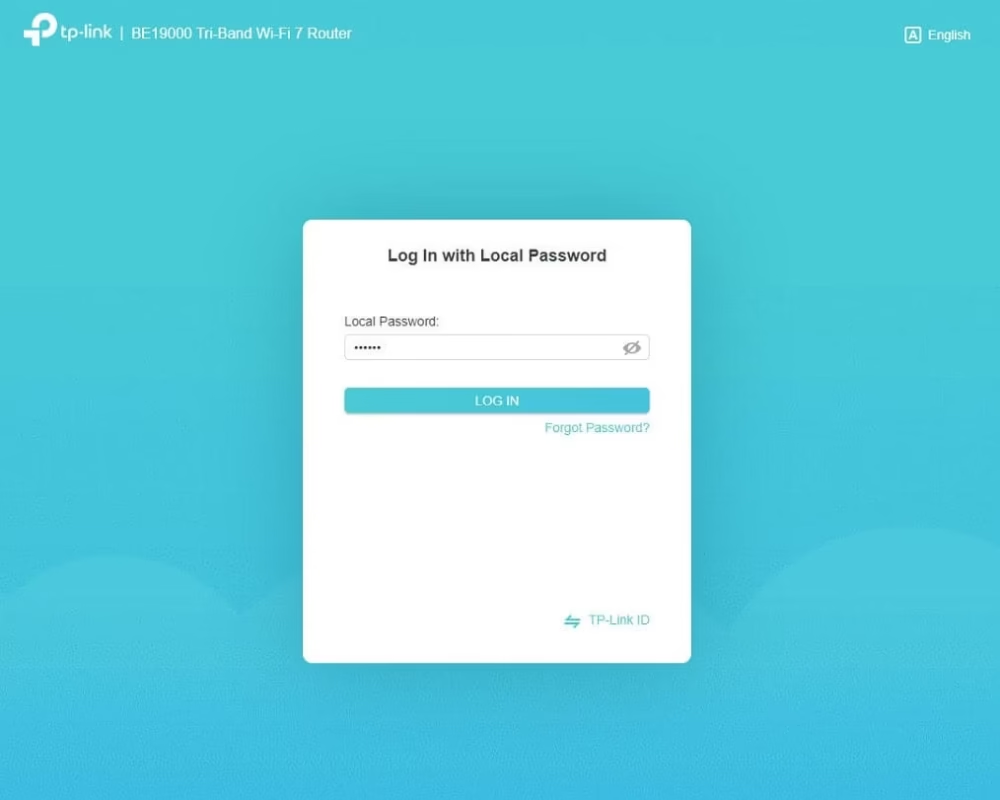
  2. Open a web browser and enter the router&#039;s IP address (e.g., 192.168.1.1 or 192.168.0.1) into the address bar. Press Enter.
  3. Log in using the admin credentials (typically &quot;admin&quot;). If unsure, check your router’s documentation for default login details.

Step 2: Configure IP Settings

  1. In the admin panel, locate the globe icon.
  2. Navigate to the IPoE tab and select ISPBroadband Connection.
  3. Under Network Connection Options, enable manual IP configuration.
  4. Enter the following details:
    • IP Address
    • Subnet Mask
    • Default Gateway
    • DNS 1
  5. Click Apply.

Step 3: Disable the IP MP Proxy

  1. Go to Home Network and select Computers.
  2. Find the IP MP Proxy setting and uncheck it to disable the feature.

Step 4: Configure ProxyUDP HTTP

  1. Click the gear icon in the bottom menu.
  2. Select Update or Components and enable the ProxyUDP HTTP utility. Perform the update.

Step 5: Enable the UPDXY Server

  1. In the bottom menu, go to Applications or Home Network &amp;gt; Computers.
  2. In the new window, select Enable UPDXY Server.
  3. Enter the following settings:
    • Port Number: Specify the port.
    • Timeout: 15 seconds.
    • Signature Interval: 30 seconds.
    • Channel: Choose Broadband Connection or ISP Channel.
  4. Click Apply.

Step 6: Verify the Setup

Once the proxy is configured, all devices connected to your router will use it automatically. Open a browser and check if your IP address matches the proxy server’s IP to confirm the setup.

Additional Features

Some routers offer advanced proxy configuration options, such as:

  1. Traffic filtering rules.
  2. VPN tunneling integration.
  3. Other advanced network management features.

How to Obtain a Proxy Server

Step 1: Choose the Proxy Type

Select the type of proxy that suits your needs:

  • HTTP/HTTPS: Best for web browsing.
  • SOCKS5: Versatile, supports various traffic types.
  • Anonymous Proxies: For privacy-focused browsing.
  • Rotating Proxies: Change IP addresses at intervals.

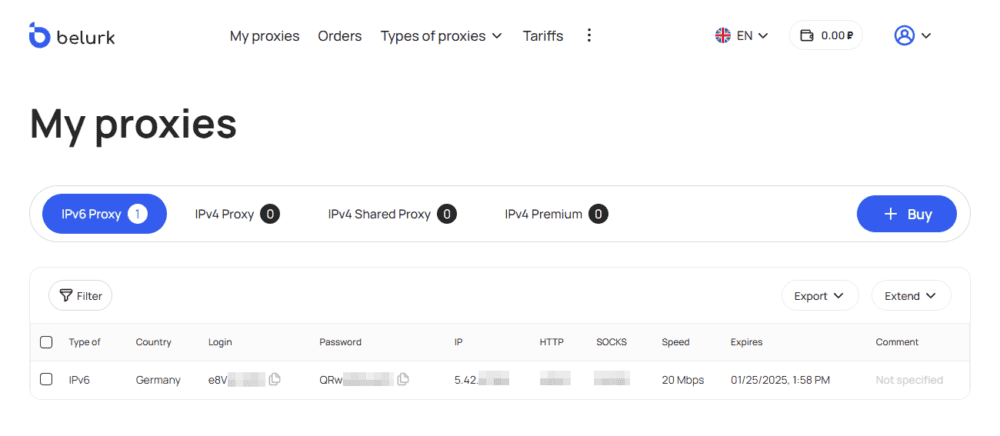
Step 2: Register on Belurk

  1. Visit the Belurk website.
  2. Create an account with your email and a secure password.
  3. Confirm your registration through the email verification link.

Step 3: Select a Pricing Plan

Choose a plan tailored to your needs from Belurk’s available options.

Step 4: Obtain Proxy Credentials

  1. Log in to your Belurk account.
  2. Navigate to the Proxy Server section.
  3. Select your desired proxy type, configure parameters, and generate your proxy.
  4. Copy the provided details, including the IP address, port, username, and password (if applicable).

Step 5: Configure the Proxy on Your Device

  1. Open your device’s network settings.
  2. Select proxy server settings.
  3. Enter the proxy details (IP address, port, etc.) and save.

Which Proxy Type is Best for Routers?

The ideal proxy type depends on your needs:

  • HTTP Proxy: Handles web traffic; suitable for basic browsing.
  • HTTPS Proxy: Encrypts data for secure web access; great for sensitive tasks.
  • SOCKS Proxy: Supports diverse protocols; ideal for streaming, gaming, and P2P applications.
  • Anonymous Proxy: Masks your IP for enhanced privacy.
  • Rotating Proxy: Regularly changes IP addresses; useful for large-scale content access.

Why Choose Belurk?

  • Reliability: High-speed, stable servers with minimal downtime.
  • Variety: A wide range of proxy types and plans.
  • Support: Expert technical assistance.
  • Security: Guaranteed user anonymity and data protection.

With Belurk, you can improve your internet experience and access resources seamlessly.

CES 2025: The Most Groundbreaking Tech Innovations Unveiled at the World’s Top Tech Show

It’s been just over a week since CES 2025 wrapped up in Las Vegas, and the wave of innovative announcements from this year’s event continues to captivate the tech world. Hosted by the Consumer Technology Association, CES 2025 drew over 141,000 attendees, 4,500 exhibitors—including 1,400 startups—and more than 6,000 media representatives, showcasing transformative technologies shaping our future. Here’s an updated look at the top 20 tech gadgets and concepts highlighted by tech enthusiast Tulsi Soni on X, with insights on their growing impact as they move toward market availability.

1. Skyted’s Silent Privacy Mask: Redefining Private Communication

The thread opens with a compelling image of Skyted’s silent privacy mask, debuted at CES 2025. Developed in partnership with the French Aerospace Lab (ONERA), the European Space Agency, and Airbus, this mask leverages aerospace acoustic technology—originally designed to muffle jet engines—to absorb up to 80% of voice frequencies. Weighing just 200 grams, the ergonomic mask ensures clear, confidential conversations in noisy environments like airports, offices, or gaming setups. Featuring a “Sound Bubble” for customizable sound control and an external speaker for hands-free communication, Skyted’s mask is gaining traction for its privacy-first design. Early backers on Kickstarter can secure one for $199 (retail price: $799). Learn more at Skyted

2. Samsung’s Extendable Micro LED Screen: Blurring 2D and 3D


Samsung’s extendable Micro LED screen stole the show, transforming 2D visuals into immersive 3D experiences. Available in sizes like 89″, 101″, 110″, and 114″, this ultra-premium display uses tiny, precision-controlled LEDs without backlighting or color filters, offering breathtaking brightness, contrast, and detail. Perfect for home entertainment, gaming, and professional use, the screen’s individually controlled pixels deliver brilliant whites, deep blacks, and vivid colors, complemented by surround sound that tracks on-screen action. Since CES 2025, Samsung has announced pre-order availability for Q2 2025. Explore more at Samsung’s official site.

3. Lenovo’s Rollable Laptop: The Future of Portable Computing

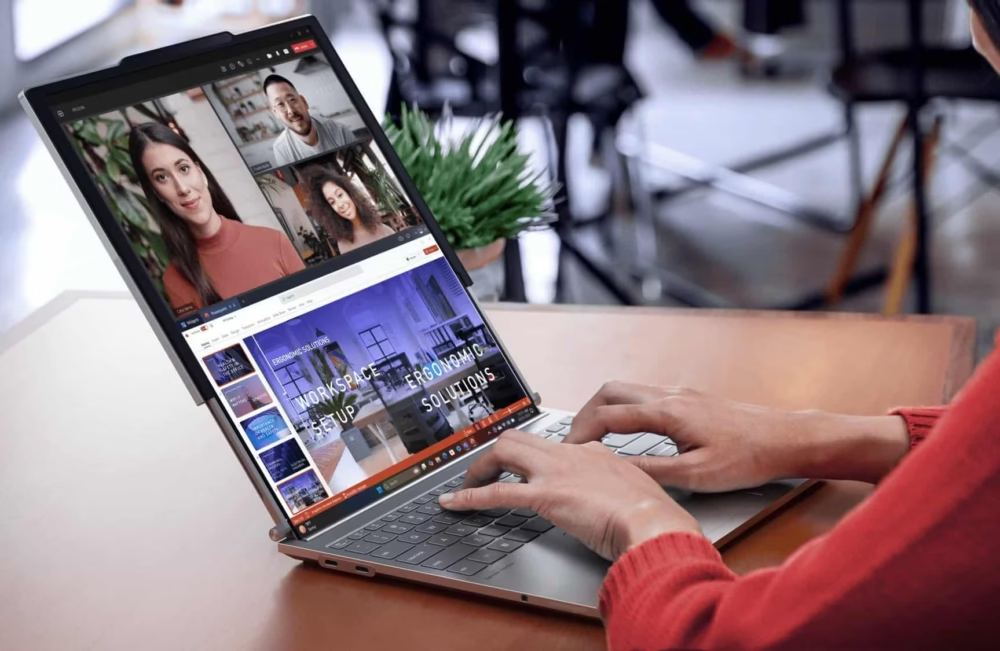
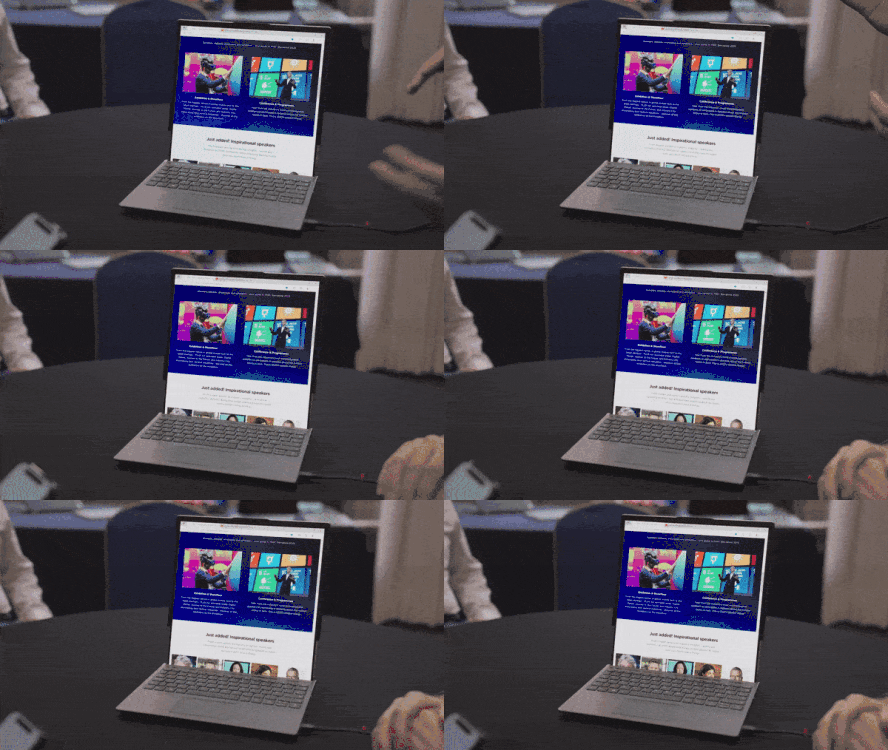
Lenovo’s rollable laptop, the world’s first extendable PC, continues to generate buzz. Priced from $3,500, this innovative device lets users extend the screen upward by 50%—effectively creating two stacked 16:9 screens—via a button or hand gesture. Starting with a compact 5:4 aspect ratio when retracted, the laptop measures just 0.78 inches thick and weighs 3.73 pounds, balancing portability with advanced functionality. Lenovo has confirmed a June 2025 launch, with early reviews praising its potential for productivity.

lenovo rolll up display techgyo.com

4.@MeetGamma: AI-Powered Content Creation in a Flash

@MeetGamma, an AI tool revolutionizing content creation by generating presentations, social media posts, and websites in under 20 seconds. Users input a prompt—such as “College application tips” or “Social media marketing strategies”—and the platform delivers polished results instantly. Since CES 2025, MeetGamma has seen a surge in adoption among creators and businesses. Try it out at MeetGamma’s website and stay ahead in the tech-driven content space.

5. Sony’s Location-Based Immersive Entertainment: Interactive LED Play

Sony unveiled a location-based immersive entertainment system, enabling players to engage with LED environments using flashlights and weapons. This concept, ideal for gaming and interactive experiences, blends physical and digital play, positioning Sony as a leader in experiential tech. Post-CES, Sony has hinted at pilot programs for public venues in 2026.

6. Mudra Link’s Neural Bracelet: Gesture-Based Control

Mudra Link’s neural bracelet transforms hand gestures into mouse or keyboard inputs, using advanced neural interfaces for seamless device control. This wearable, demonstrated at CES 2025, promises to redefine human-computer interaction. Mudra Link has announced pre-orders for Q3 2025, with early access for developers.

7. BMW’s Panoramic iDrive: 3D Windshield Displays

BMW’s Panoramic iDrive, a 3D head-up display spanning the entire windshield, projects navigation, speed, and alerts for enhanced safety and immersion. Unveiled at CES 2025, this innovation aligns with BMW’s push toward autonomous and electric vehicles. The feature is slated for select models in 2026.

8. Acer’s 11-Inch Windows Gaming Device: Portable Power

Acer’s 11-inch Windows gaming device delivers high-performance graphics in a compact form, ideal for gamers on the move. Since CES 2025, Acer has confirmed a spring 2025 release, with pre-orders opening soon. This device underscores the growing demand for portable, powerful gaming solutions.

9. Unitree’s G1 Humanoid Robot: A Leap in Robotics

Unitree’s G1 humanoid robot impressed with its lifelike movements and versatility, demonstrated live at CES 2025. With applications in industry, healthcare, and logistics, the G1 represents a major step forward in robotics. Unitree has announced production for late 2025, targeting industrial partners first.

10. Amazfit’s Budget Fitness Watch: Affordable Innovation

Amazfit’s $100 fitness watch, packed with voice control, health metrics tracking, and offline maps, offers high-tech features at an accessible price. Since CES 2025, Amazfit has expanded pre-order availability globally, with shipping starting in March 2025.

11. Withings’ AI-Powered 360° Body Scanning Health Mirror

Withings’ AI-powered 360° body scanning health mirror analyzes heart rate, weight, metabolic health, and more, offering a comprehensive home health check. Unveiled at CES 2025, Withings has confirmed a summer 2025 launch, with early access for health tech enthusiasts.

12. Roborock Saros Z70: Smart Vacuum with a Mechanical Arm

Roborock’s Saros Z70 robotic vacuum cleaner features a mechanical arm to pick up obstacles, ensuring a spotless floor. Since CES 2025, Roborock has announced a fall 2025 release, with pre-orders opening in June.

13. BYD Yangwang U9 Supercar: Leaping Into the Future

BYD’s Yangwang U9 supercar, capable of leaping 6 meters over bumps, showcased its advanced suspension and electric powertrain at CES 2025. This high-performance EV is set for a 2026 launch, with pre-orders expected later this year.

14. A Pen with Three Cameras: Digital Note-Taking Anywhere

This pen, equipped with three cameras, turns any surface into a digital canvas, syncing notes to your phone in real-time. Unveiled at CES 2025, the pen is slated for a late 2025 release, targeting creative professionals and students.


The Lasting Impact of CES 2025

Held from January 10, 2025, in Las Vegas, CES 2025 highlighted innovations in mobility, health, energy, and entertainment, addressing global challenges like sustainability and labor shortages. With major players like Samsung, Lenovo, Sony, BMW, and startups like Skyted leading the charge, the event underscored technology’s transformative potential. As these innovations move toward production and consumer availability in 2025 and beyond, they promise to reshape how we live, work, and play.

Which CES 2025 gadget excites you the most? Share your thoughts, and stay tuned for more updates as these technologies hit the market!

Next-Generation Tools: Smarter, More Powerful, and More Efficient – Discover at UK Planet Tools

0

The world of power tools is constantly evolving, with each new generation offering smarter features, more power, and enhanced efficiency to meet the ever-changing demands of both professionals and DIY enthusiasts. As technology continues to advance, tools become more user-friendly, and their capabilities grow, making them indispensable for every home improvement or construction project. At UK Planet Tools, we offer a wide range of next-generation tools that combine the latest in technological innovation with the trusted durability that professionals rely on.

next gen tools

In this article, we’ll explore how next-generation tools are reshaping the way we work, the innovative features driving this revolution, and how UK Planet Tools is at the forefront of providing the most cutting-edge tools for every job.

1. Smart Technology: Enhancing User Experience

One of the biggest advancements in the power tool industry is the integration of smart technology. Smart features are no longer a luxury, but a standard in many of the latest models. These tools are designed to enhance user experience, improve safety, and streamline your workflow. Tools now connect to your smartphone or tablet via Bluetooth, allowing you to monitor their performance and track your usage.

  • Tool Tracking: With smart features like tool tracking, users can now keep tabs on the location and usage of their tools, reducing the risk of lost or misplaced equipment. UK Planet Tools offers a variety of smart tools from brands like DeWalt and Makita that allow users to manage tool performance and maintenance needs.
  • Real-Time Diagnostics: Many next-generation tools come with diagnostic apps that provide real-time information on battery life, motor performance, and tool maintenance. This not only improves the efficiency of the work but also helps avoid unexpected breakdowns or malfunctions.
  • Customizable Settings: Some smart power tools allow users to adjust settings remotely. For example, drills and saws may have customizable speed or torque settings, giving you full control over the operation. Whether you’re working with softwood or heavy-duty materials, you can adjust the tool’s performance to suit the task at hand.

2. Increased Power and Efficiency

Today’s next-generation power tools deliver higher power output with more efficiency, allowing users to tackle demanding tasks in less time. Whether you are a professional working on large-scale construction projects or a DIYer tackling home repairs, the increase in power and efficiency ensures that jobs are done faster and with better results.

  • Higher Torque and Performance: With brushless motors, next-generation tools offer up to 50% more power and run time compared to traditional models. This allows for greater torque, making tasks like driving screws into tough materials, drilling into concrete, or cutting through thick lumber quicker and easier.
  • Battery Technology Advancements: Lithium-ion batteries have made cordless tools more powerful and efficient than ever before. UK Planet Tools carries tools that feature high-capacity batteries, offering longer operational times, faster recharging, and consistent performance throughout their lifespan.
  • Energy-Efficient Features: Next-generation tools are also designed to minimize energy consumption. Many new models come with eco-mode settings that reduce power consumption when the tool is not in use, contributing to lower operating costs and extending battery life.

3. Improved Durability and Longevity

Durability has always been a priority when it comes to power tools, and today’s models take it to the next level. Next-generation tools are built to withstand tougher conditions, offering greater longevity and a more reliable performance, even in the most demanding environments.

  • Rugged Construction: Tools like impact drivers, circular saws, and angle grinders are built with reinforced housing, robust motor protection, and shock-absorbing technology. This ensures that even after years of heavy-duty use, the tools continue to function optimally.
  • Dust and Water Resistance: Many modern tools are now designed to be resistant to dust, moisture, and even extreme temperatures. These features are particularly beneficial for outdoor projects or those working in construction sites, where weather conditions can be unpredictable.
  • Maintenance-Free Operation: Brushless motors in next-generation tools reduce wear and tear, lowering the maintenance requirements. With fewer moving parts, these tools experience less friction, resulting in less heat generation, which in turn extends their lifespan.

4. Ergonomics and Comfort: Tools Designed for Long-Term Use

The design of next-generation tools places a strong emphasis on user comfort and ergonomics, making it easier for both professionals and DIY enthusiasts to work for longer hours without fatigue.

  • Lightweight Design: Many new tools are now lighter and more balanced than their predecessors, which reduces strain on the user’s body, especially during prolonged use. Makita, DeWalt, and other leading brands ensure that tools are easy to handle, improving productivity and minimizing the risk of repetitive strain injuries.
  • Vibration Reduction: Tools such as cordless drills and sanders come equipped with anti-vibration technology. This not only makes working with the tool more comfortable but also improves control and precision, allowing users to complete their tasks with greater accuracy.
  • Ergonomic Grips: New tools feature padded, soft-touch grips and adjustable handles to ensure comfort, even during the most intricate and repetitive tasks. The user-centric design enhances grip, prevents slipping, and reduces hand fatigue, even after hours of continuous work.

5. Versatility Across Multiple Applications

One of the key advantages of next-generation tools is their versatility. Whether you’re assembling furniture, working on a renovation, or engaging in complex construction tasks, these tools offer a broad range of applications, making them suitable for any project.

  • Multi-Functional Tools: With the advancement of tool attachments and accessories, you can now get more done with a single tool. For example, a cordless drill can be used not only for drilling but also as a driver or with special attachments for sanding or cutting.
  • Modular Systems: Tools like Makita’s 18V LXT system or DeWalt’s FLEXVOLT system offer interchangeable batteries and attachments across different tools, allowing for seamless transitions between tasks without having to purchase separate, specialized equipment.
  • High Adaptability: Whether you’re working with wood, metal, or masonry, next-generation tools come equipped with adjustable settings, making them adaptable to various materials and tasks. The ability to switch between applications with ease saves time and improves efficiency.

6. Conclusion: Embrace the Future of Home Improvement with UK Planet Tools

The revolution in power tools is not just about improved technology, but also about creating tools that offer more power, enhanced efficiency, and greater ease of use. With innovations like smart connectivity, brushless motors, and advanced ergonomics, next-generation tools from leading brands are transforming how we approach home improvement and professional projects alike.

At UK Planet Tools, we offer a wide selection of these cutting-edge tools to help you complete any project with ease, whether you’re working at home or on a construction site. By choosing the latest power tools, you’re not only ensuring high performance but also setting yourself up for long-term success. These tools empower you to work smarter, faster, and more efficiently, making them an essential part of any modern toolkit.

Explore the future of home improvement at UK Planet Tools and find the perfect next-generation tool for your next big project!

Nippon Paint Unveils Cutting-Edge Paint Solutions for India’s Commercial Vehicle Industry at Prawaas 2024

0

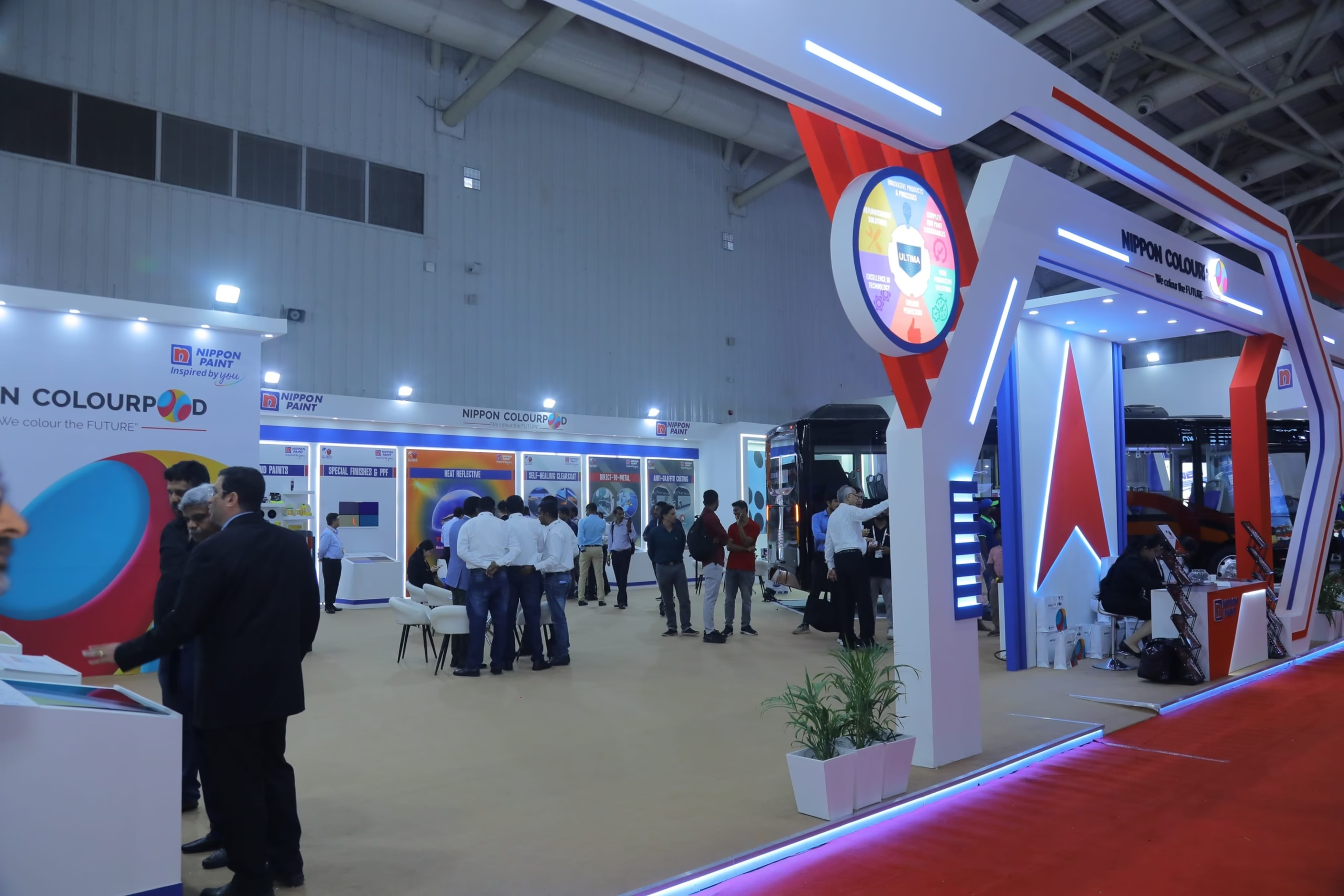
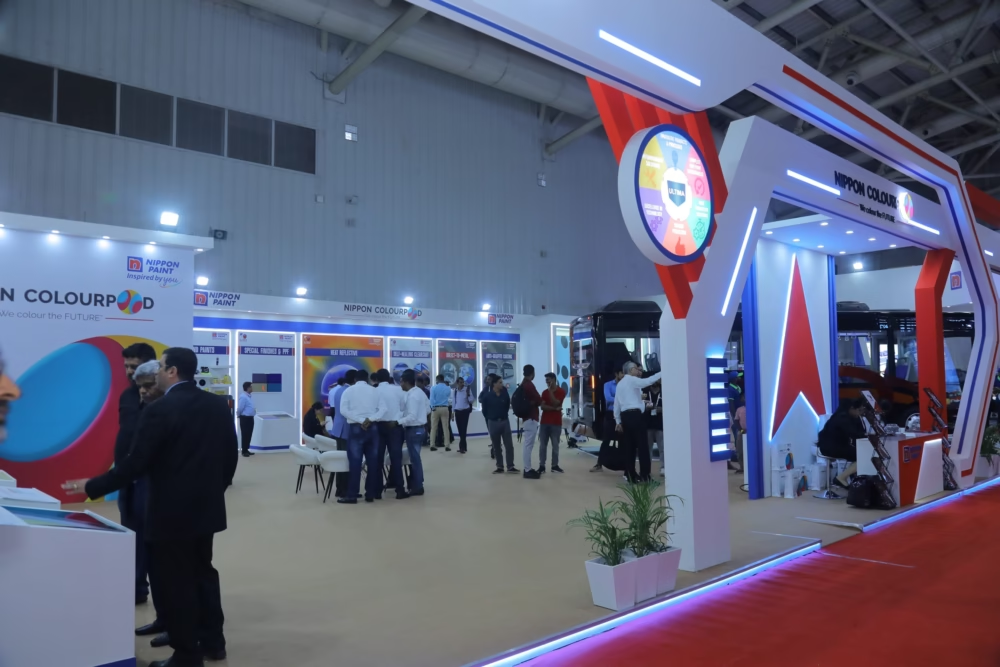
Nippon Paint, the leading paint and coatings company in the Asia Pacific by revenue, made a significant mark at Prawaas 2024, India’s premier multimodal transport show. Held from August 29th to 31st in Bengaluru, this fourth edition of the event was organized by the Bus & Car Operators Confederation of India (BOCI) and drew over 100 expert speakers, 200 leading exhibitors, and 10,000 business visitors.

Nippon-Paint-India-at-Prawaas-4.0-scaled

At the event, Nippon Paint showcased its comprehensive range of innovative and futuristic paint solutions tailored specifically for the commercial vehicle industry. Among the highlights were advanced functional coatings designed to reduce emissions, heat, and dust, as well as product systems aimed at optimizing productivity. Notably, some of these offerings include patented product lines that set new standards in the industry.

Nippon Paint further demonstrated its technological prowess by integrating its high-tech products with world-leading AI technologies for color correction and development, VR software for painting simulations, and automated robotic paint applications. The company’s goal was clear: to show how its paint systems, powered by a robust global technology base, can significantly impact the future of transportation in India.

Rakesh Handoo, General Manager of Marketing & New Business Development at Nippon Paint India, emphasized the importance of the event: “Prawaas 2024 highlighted the crucial role of efficient public transport in alignment with Prime Minister Narendra Modi’s vision of Viksit Bharat 2047. During the event, we showcased our cutting-edge paint technologies that are revolutionizing the commercial vehicle industry. Our participation reflects our commitment to delivering innovative solutions that enhance the safety, efficiency, and sustainability of public transport in India.”

Navin Chawla, General Manager of Commercial Vehicle Coatings at Nippon Paint India, echoed this sentiment, stating, “Prawaas 2024 was a resounding success and a step forward towards a new era of transportation. Nippon Paint equipped over 70% of the displayed buses with our paint systems at the event. Beyond our product strength, we also demonstrated our brand’s commitment to expanding possibilities in the commercial vehicle industry.”

Through its participation in Prawaas 2024, Nippon Paint underscored its dedication to advancing the commercial vehicle sector in India. With innovative paint solutions and a focus on sustainable, efficient, and safe public transport, the company continues to lead the way in shaping the future of India’s transportation landscape.

How to Use Digital Flipbooks for Online Marketing

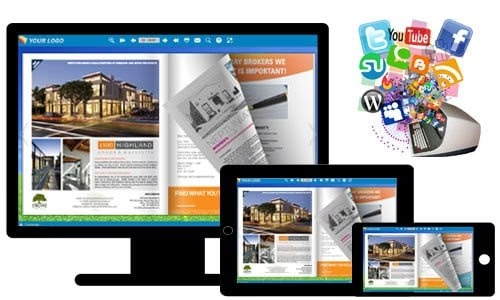
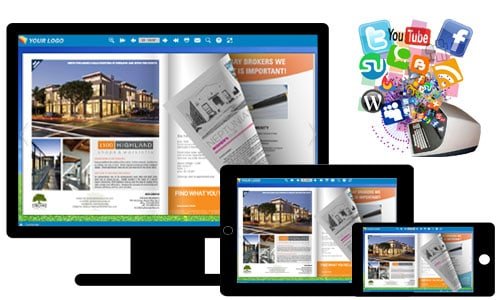
Do you want a practical way to promote a certain process or key information regarding your business? Digital flipbooks are an excellent way to convey your message electronically and are precisely what their name sounds like. Digital flipbooks are essentially a digital magazine that allows you to flip through it on your laptop, computer, or some other electronic device.

digital flipbook marketing


This innovative multimedia brochure can be used in a number of ways including posting it on various websites, emailing it, sending it as an autoresponder, or incorporating it into your own site in order to enhance your marketing tactics. Digital flipbooks utilize ground-breaking technology in order to create a highly attractive presentation in a whole new and better way.


Flipbooks are the Future of Digital Publishing

Digital flipbooks are basically a type of interactive ebook. You’ve already used a digital ebook if you’ve ever been on a device like a Nook or Kindle and turned pages. They offer great visuals and compelling images in addition to captivating content. When creating a flipbook, you have the option to add text, images, music, video, or animated graphics to your publication in order to produce a high-tech, savvy look for your business.

People like the sense that they’re interacting with what they’re reading. Digital flipbooks offer vast new ways to engage with content, particularly with regards to visuals. Therefore, you have the ability to use the same content you would have otherwise incorporated into an ebook, except you’re putting it into a digital flipbook to make it more compelling and fresh on a visual level. To find out even more about the creation of flipbooks, click here.


Benefits of Using an Online Flipbook

Print reading materials today have already experienced their inevitable evolution into the world of digital media via virtual magazines and ebooks. They’re also used more and more due to the proliferation of e-readers, tablets, and other innovative mobile devices. It’s fun to turn the pages of a virtual book or magazine with just a gentle swipe of a finger, which calls to mind the customary reading format that a number of readers still want and love.

Today, thanks to the advanced technology of flipbooks, virtually any digital content on a page can easily be transformed into a visually-pleasing virtual document where readers are engaged through a high-tech navigation technique where the pages are fun to turn.

Why would anyone want to use a flipbook when traditional print magazines, manuscripts, reports, and other standard media can still do the job? Because, in fact, they don’t do the job as well as a flipbook. Flipbooks have huge benefits when compared to other conventional printing methods, some of which include the following:

• Greater Flexibility

You can create a flipbook to be whatever you want. It can be a how-to manual, a company brochure, a book, a comic strip, a website, or a periodical. There’s no end to what you can create with flipbook technology.

• High Impact

A flipbook has the capability to convey virtually any text, image, or any other type of multimedia better than standard print today. In fact, because of interactive graphic design, digital flipbooks are even more eye-catching, visually-appealing, and colorful than print materials could ever hope to be.

• Farther Outreach

Physical documents have to be passed from one person’s hand to another, which could literally take forever. On the other hand, create just one flipbook and you’ve generated one single piece of content that countless people can access and share simultaneously.

 Generate Advertising Dollars

You can add links to your flipbook in order to generate revenue by promoting other companies or your own products or services. Also, you can sell ad space and earn more profit through that channel as well.

 Amazing Interactivity Level

A flipbook maintains the same user-friendly and familiar page-flipping experience that still appeals to many readers today.

Cost Savings

Flipbooks only have one, low conversion cost vs. conventional print that involves the price of materials and distribution costs through shipping or manpower.

Contrary to what most people believe, digital versions of content and other multimedia don’t decrease a reader’s overall attention span. Instead, a digital version will actually help the reader retain more information in a better way. When compared to hardcover texts, ebooks and similar digital formats have the ability to be highly interactive in order to enhance the study habits of students, thereby improving their overall performance in school.

There’s never been a better time to create a digital flipbook for your business. Why? Flipbooks are a relatively new format so you’ll be the first to get in on the ground floor of this cutting-edge technology and benefit from it. When it comes to creating flipbooks, the sky is the limit.