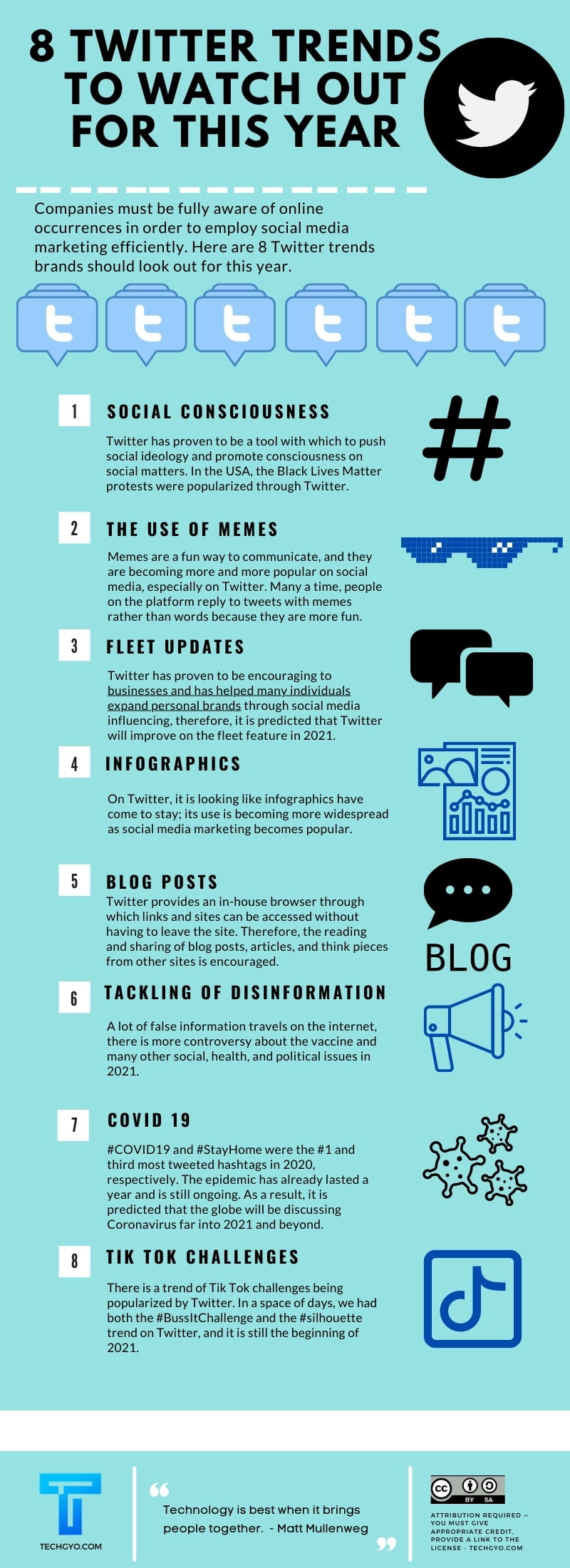
If you want to get the most out of any platform, you need to understand why people use it, what they want to talk about, and how you can capitalize on those trends. Twitter has released a new 33-page trends report assisting with this, highlighting a variety of emerging themes based on overall tweet interaction over the last two years.
So Twitter is looking at the platform’s cultural effect in a larger sense, but from a marketing standpoint, it’s more about what people are going to Twitter for, specifically, and how it connects to discussions in the app.
As Twitter said: “People come to Twitter to talk about the things that matter to them. Entertainment, news, sports, fashion – it’s all here. And by analyzing these honest conversations, we can get a fresh understanding of the evolving cultural trends and attitudes shaping our future.”
If you’re an avid reader, you’ve landed at the right place. Choosing the right book to read can be a little confusing, you obviously want to invest in the right book to read to get some value out of it. Reading the summary of the book can help you in deciding the right one for you. As Stephen King quotes, ”Books are uniquely portable magic”, in this article we bring you the top magical book summary apps where you can read the summary of a book before deciding on which book you want to go ahead with, no matter the genre- romance, comedy, suspense, thriller, horror and so much more. So what are you waiting for? Dive right in!
Top 10 Book Summary Apps
1. Blinkist
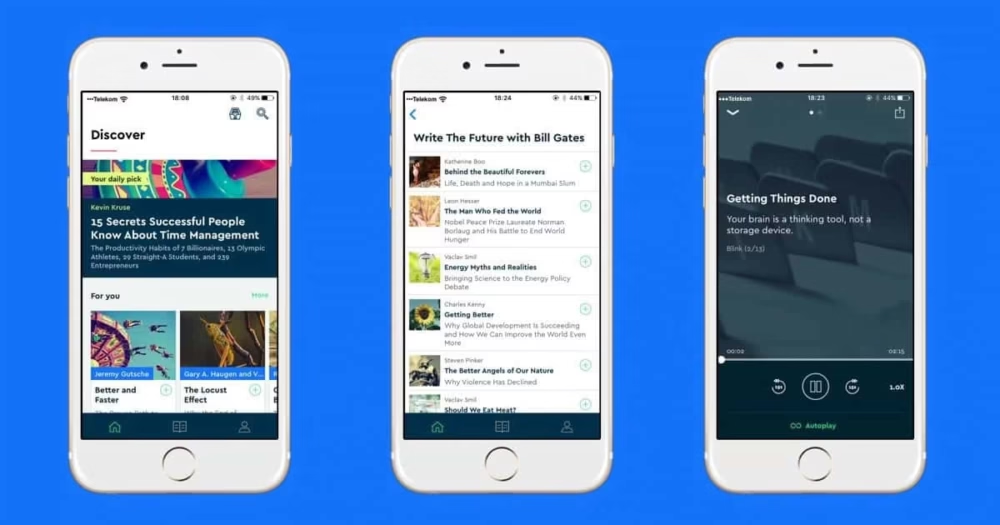
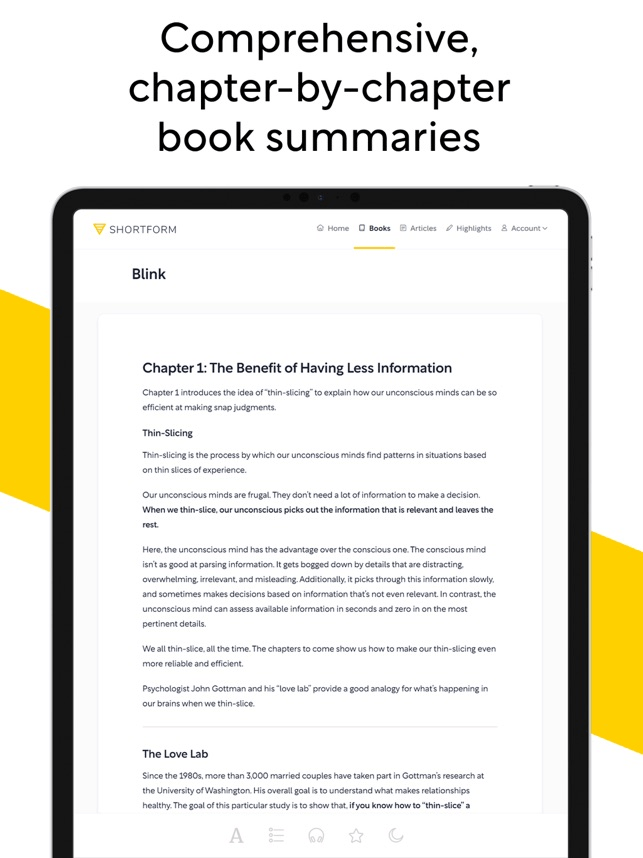
This is the best app for book summaries in the market as Blinkist was the first to start this idea of creating a platform where readers can look for summaries. Being the oldest book summary service, it comes with many features at a reasonable price. You can read book summaries in no more than 5 minutes or even listen to them. It has more than 3000 book titles with over 27 categories. It’s a great platform for reading non-fiction books.
Features:
Read or listen to books
You can get book lists curated by experts and find personalized recommendations.
Includes Shortcasts from creators across the world.
Price:
Starts at $14.99/month.
$89.99/year
Has a free trial period of 7 days.
Suitable For: Readers who are mainly into non-fiction
This app is relatively new in the market and has a summary collection of over 1000+ non-fiction books. You can learn the key points of a book in less than 30 minutes. It consists of book categories like Management & Leadership, Business, Entrepreneurship, Money & Finance, etc.
Features:
Cuts out the clutter and keeps only the main points of a book.
It has a comprehensive interface.
They have one-page summaries for short takeaways.
They also have a detailed and comprehensive analysis of books.
Price:
It comes with a 5 days free trial period.
Starts at $24/month.
$197/year.
Suitable For: Non-fiction readers, Startups, Entrepreneurs looking for short or detailed analysis.
This app is one of the best ones for book summaries out there, it has been in the game for way too long and has a different approach. They mainly have books related to enterprises and businesses. So it’s a perfect pick for you if you’re looking for books in that category. They have over 20K+ summaries and also TED talk videos.
Features:
Includes optimized audio summaries.
Summaries are available in E-reader formats.
Available on Kindle, Nook, and Kobo.
Price:
Includes a 3-day free trial.
Starts at $29.90 per month.
5000 summaries priced at $99/year.
$299/year for over 22K+ summaries.
Suitable For: Managers and Employees working in large industries
If you’re someone who’s big on quality and not quantity then this app is for you. This app offers bestselling book summaries in 15-minutes text or audio segments. It has 1K+plus books covering categories like politics, arts, fiction, psychology, etc.
Features:
Available in audio and text formats.
Available on mobile, tablet and desktop.
More than 1K+ titles.
A wide range of categories to choose from.
Price:
Starts at $8.99/month or $89/year.
Forever lifetime deal of $299.
Has a free trial of 7 days.
Suitable For: Individuals pursuing MBA and readers looking for content on the educational side.
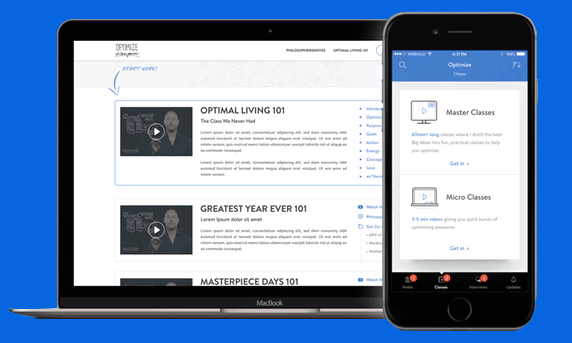
This is a great app if you’re looking to self-reflect or develop yourself through inspirational and motivational books. It has a lot of motivational content. It has a section called “Philosophers Notes” which has a wide range of summaries of self-help books.
Features:
Contains self-help and leadership books.
Has summaries in the form of MP3 files.
Contains some free books.
Price:
Has a free trial of 2 weeks.
Comes with an Annual membership of $7.99/month.
Suitable For: Readers or individuals looking for a self-improvement niche.
This is a platform where you can read or listen to personal development book summaries in no more than 12 minutes. It has a virtual learning platform called ‘ActionClass’ which offers leadership development programs.
Features:
Includes 36 leadership and soft skill competencies.
Offers classes 3 times per week around your choice of title.
Helps businesses with ideas and coaching to grow their business.
Price:
Book Summaries: $29/month | $299/year | $499/lifetime
Business Coach’s Growth Network: $129/month | $1,299/year.
Suitable For: For anyone looking for leadership business training.
If you’re in a hurry to read business book summaries, then this app is for you. It has a collection of over 1K+ must-read business books. It also has an amazing collection of self-help books.
Features:
300+ pages books are boiled down to a summary of roughly 8 pages.
Helps you achieve more in your business, career, and your personal life.
Contains the audio version of summaries.
Learn from authors with 20+ years of expertise.
Price:
Weekly 5-minutes free plan.
Starter Plan- 5 x 30-minutes summaries for $15.
Monthly Plan- 4 x 30-minutes summaries for $12.
Yearly Plan- 50 x 30-minutes summaries for $100.
Suitable For: Individuals looking for business books on a daily basis.
This platform is implemented in a unique way, the book summaries are converted into graphics or infographics. How cool is that? Each summary is available in 3 formats: 1-page infographic summaries, 10-15 page text summaries, 20 minutes audio summaries.
Features:
Contains free samples.
Summaries are in the form of graphics.
Summaries are available in the form of short blogs.
You can buy single summaries.
Price:
It has a free forever plan where you can get access to 2 free summary samples.
Pricing starts at $14.14/month.
You can purchase a single book summary at $9.97.
Suitable For: Readers who prefer summaries point-wise and enjoy graphics.
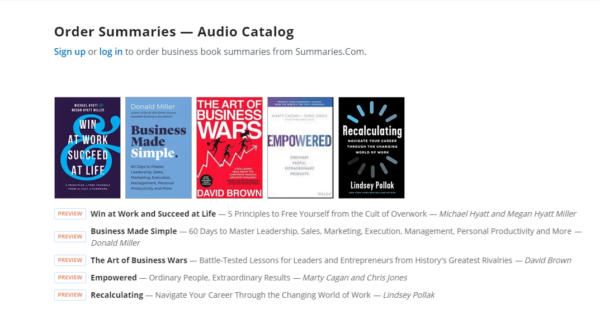
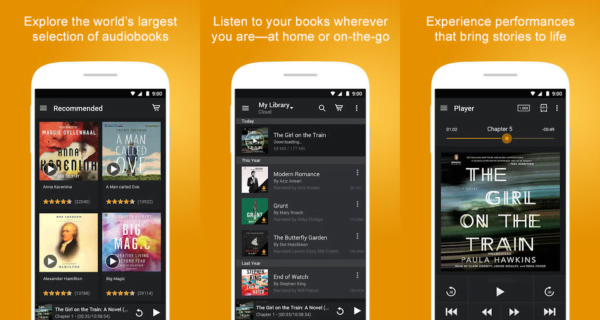
Audible is a product by Amazon, where you can listen to your favorite books in the form of a speech. It has thousands of books of all genres and categories. You can even download your favorite books on Audible to your device.
Features:
You can listen to books offline.
Listen to your favorite books anytime and anywhere.
Get additional information about author events.
Share the book that you are reading on Facebook and Twitter.
Pricing:
Comes with a free trial period of 30 days.
Costs $14.95/month.
Suitable For: Individuals who prefer listening to books over reading.
This app is for readers who are big on non-fiction books. It has a collection of over 800 book summaries for free, you can read each summary in more than 4 minutes. The summaries come out thrice a week and the users can subscribe to the newsletter. At the end of each summary, you get to learn 3 valuable lessons.
Features:
Take away 3 major valuable lessons.
Read the book summary in no more than 4-minutes.
Free book summaries.
Audiobooks as MP3 and on SoundCloud.
Price:
Purchase library of PDFs for $99.
Purchase 300 audiobooks for $49.
Suitable For: Users looking for podcasts of books.
This was about it for the top 10 websites and apps for book summaries. One interesting thing about summaries is that they not only give you an insight into a book but also let you decide on which book you want to read. It’s crazy how technology has stepped up the reading game and made it much easier for readers all around the world to access their favorite books. Let us know in the comments section about your favorite book and your favorite platform to read books.
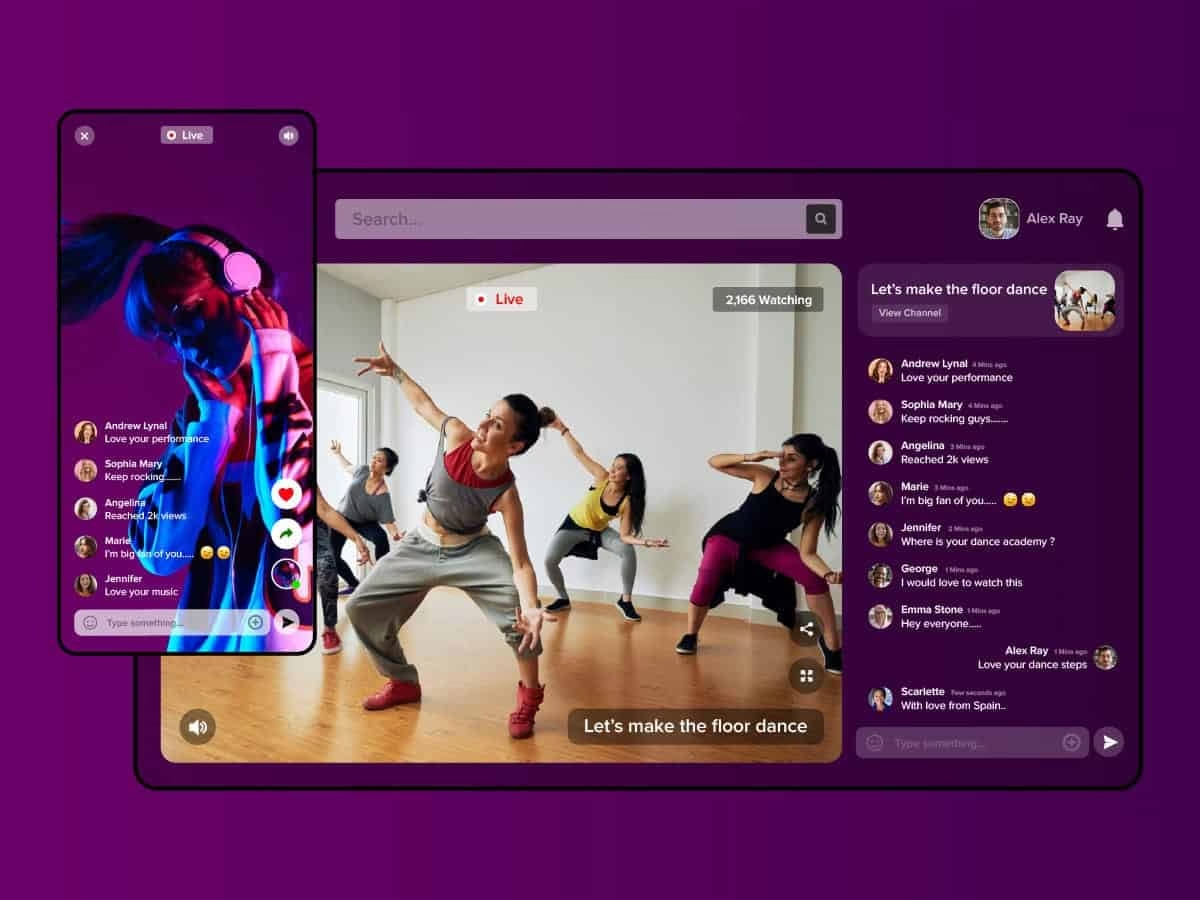
In-app Chat in Virtual Event Platforms acts as a powerful tool! A virtual event platform is a space where people attend online events exhibited by a host. An in-app chat lets the attendees use live & private chats features to experience a real-time, in-person presence while attending these virtual events. The in-app chat solutions enable attendees’ network with each other and provide space for chat rooms using which the attendees interact with hosts. In addition, a custom In-app Chat service will allow the host to share documents, images, videos and have more interactive virtual events.
Everything About In-app Chat API
The In-app Chat API is a set of application programming interfaces that allows access to back-end chat service and the server infrastructure with feature-set and offers an easy embedding of real-time chats into any app.
So, an in-app chat API for a virtual event platform denotes a collective chat API that comprises essential features like instant live chat, voice, and video call to enable real-time communications to engage in the virtual events.
Let’s now move to understand how an in-app messaging platform supports and enhances the virtual events.
How does an In-App Chat API prove Useful for Virtual Event Platforms
Virtual event platforms require additional care in the development stage, as these platforms must be dynamic, user-centric, and offer an enhanced user experience.
For any virtual platform to be successful, instant chat and real-time interaction are critical. Hence, integrating an in app messaging API can prove helpful to virtual event platforms, as it allows users to chat and network with the host and other attendees.
The primary objective of a virtual event is to create an interactive session among the audience and host, allowing users to chat, share media files, call and network.
While it is possible to list down multiple uses a virtual event platform can gain by adding in-app chat features, here are the nine most compelling reasons why every virtual event platforms must integrate with an in-app chat:
1.Get Global Language Connect
Most virtual events have attendees from across the globe, and an instant message translator will help break the language barriers and establish engaging events.
In a career seminar, the host might ask for feedback in the chat room, and users can type their feedback in preferable language that gets auto-translated at the host side. Therefore, the real-time text translator in chats is one of the most worthy features of an in-app chat SDK.
2. Message by User Reactions
When a text message fails to express correctly, the emojis and GIF stickers allow users to express themselves better. For example, in a live trade show, the host may raise a question and seek attendees’ opinions. Here, attendees may react, selecting different emojis and stickers, thus, allowing the host to determine the likeliness of the question on the go.
Almost all popular video chat api for virtual event by default have emojis, GIFs in their APIs to allow users to react and express. Also, adding emojis and stickers enhances user engagement.
3. Seamless Media Files Sharing
Sharing files from within the app allows users to transfer files, images, worksheets, and documents seamlessly.
An in-app video chat solution for online event platforms will likely attract more users when a media sharing function comes with the chat API. For example, at the end of a career training event, the Trainer( host) may ask participants to share their resumes; and the advanced in-app chat feature lets the attendees upload their documents securely in the chat rooms.
4. Access from the Same Screen
Too many apps and communication channels, and users are struggling to stay on the same screen; switching between screens is so common, annoying, and the user may lose track of information.
So, what all users look for in a virtual event platform is one place to store, access, and retrieve the chats and files when required. The in-app video calling API for virtual platforms comes with a dedicated space for chat storage and facilitates voice and video calling from within the app.
In an online expo event, attendees can chat with the host and other attendees, transfer files, exchange ideas without disclosing their email ids and phone numbers.
5. Transparent Chat Rooms
Every virtual event platform should have a chatroom for its users to connect and interact with others. By integrating Chat API into android apps and web apps it is possible to know the read receipts and message delivery notifications, thus creating an impactful communication.
In a virtual Job Fair, attendees can selectively choose to interact with the host to share their details; if their message gets read, then they can continue their conversation over the chat room and leave the chat. The transparency of message status lets each user take action sensibly and save time.
6. Networking with Cause
In online virtual events like online seminars, the host can discuss subjects and interact one-on-one while the remaining users remain as an audience. Also, users get to interact and make important network connections using the chat rooms.
However, the host can moderate the live chats for inappropriate language in the public forums and channels using in-built tools of In app messaging for ios, android, and web apps like the profanity filters.
6. Monetize to Benefit
Any virtual event organization will have sponsors for all their events. In such a scenario, for the sponsored events, the host may create chat rooms dedicated to the sponsors or display their name and information frequently, helping event attendees.
In a Wedding virtual Fair, the host can display ads of caterers while introducing them. In a virtual book fair, the publisher or sponsor can get a separate chat room to interact directly with attendees.
Virtual Event Platforms and the event hosts must capitalize on the customization of In-app Chat API to reap the monetization benefits and add value to the event.
7. Secure Virtual Networking
Generally, people worry about the occurrence of privacy breaches while using any online event platforms. However, when a virtual platform provides the option to communicate with other users to exchange information and chat via a secured and encrypted communication path, then the worry disappears.
Several In app messaging API for ios and other platforms make it a point to secure all their messaging apps with end-to-end encryption. Also, a reliable chat API must possess GDPR Complaint and follow all security protocols.
8. Live Video and Voice Calling
Considering the present challenging time during the pandemic, and the advancement of technology, messaging alone is not the option people depend on; live video and voice calling API to enhance user experiences.
Integrating video call apifor virtual event platforms is one way for virtual platform organizations to attract users as it gives the in-person meet-up feel. For instance, a manager can dial up a video call to connect with a teammate directly from within the event app to receive updates in a virtual office meeting.
Wrapping up
For a virtual event platform to become successful, it must have features that allow the users to stay within the app and perform necessary actions like video calls and chat. Therefore, to create a virtual event platform, choose in-app chat API functionalities that support enormous concurrent users. So, wisely choose an In app messaging softwarethat helps you develop the best virtual event platform.
Having an attractive, engaging, and informative website is almost mandatory for businesses to thrive in this digital age. For customers, it becomes a virtual portal into the company’s world and workings.
A website contributes to increased awareness about your company and encourages customer involvement, making it a two-way relationship. 97% of buyers depend on an online source of information to research local businesses. 47% of people visit the websites of companies before making a purchase.
Ensuring that your website is made and maintained wisely thus becomes a significant responsibility to be carried out. It requires a lot of strategizing and planning critically. Are you wondering how to pull that off? The following are specific guidelines to keep in mind to create a successful website.
Have a purpose
A website, just like any other endeavor undertaken by an organization, should have clearly defined goals. You must decide whether your website’s purpose is to publish useful articles, increase brand image, create sales, provide customer service, or something else entirely.
Moreover, this purpose should simultaneously sync with the audience’s needs. Thus, whatever function the site sets to fulfill for both parties must be identified beforehand.
Pick the appropriate domain name
The website’s domain name has to be both relevant to the company and accessible to the visitors. Choosing an apt web hosting service, whether shared, individual, cloud, clustered, etc., is also a part of it. You should do this by considering several things, such as the cost, server locations, reliability, etc.
The domain name should be catchy and pertinent to the business at hand. It is advisable to have a short yet descriptive SEO-friendly name free of numbers, abbreviations, and symbols so that it becomes easier to discover the site.
A .com extension is preferable because customers tend to use it commonly while searching. Some other recommended suffixes are .net, .org, .gov, .biz etc., depending on the type of website.
Make it easy to navigate and use
A haphazardly organized website can give customers a frustrating experience. To maximize customer satisfaction, it becomes vital to have a website that demands minimal effort from visitors.
The site must have clear headings and titles for each page- such as ‘contact information’-systematically organized in the menu. Thus, ensuring that the website isn’t too complicated and organizing it by categories and subcategories can make it more accessible.
The website should have a personality of its own, which can be portrayed through images, graphics, and a well-executed design.
Since 80% of web users now own smartphones, it becomes necessary to have a mobile-friendly website so that the company is right at the palms of its consumers.
Invest in SEO
87% of online purchases start with a simple web search. Web hosting services provide analytics and information for Search Engine Optimization, which can perfect the website.
Since more than 75% of such searches go to the pages with the first five rankings, ensuring that the company website has more online presence becomes very important.
SEO increases the website’s exposure and visibility. It ensures that the site will show up more often on the search engine results page when customers search the company or information related to its products and services.
This is done using keywords, internal, external, and social media links, increasing the site loading speed, etc., to boost the website traffic. Therefore, strategizing using SEO tactics can increase the rankings of the website and give it more reach.
Conclusion
Having an efficient, quickly accessible, and memorable website is necessary for businesses worldwide. Therefore it’s important to give your website the attention it requires and deserves.
From selecting a web hosting provider to monitoring the site once it’s established, managing a website is a task that requires care and planning at every stage to optimize its scope and influence.
Making the right choices is a key part of running a successful business. But how do you know that a certain decision is the right one? In the past, business owners might have relied more heavily on their intuition, gut feeling, and feedback from others when it came to making the right decisions regarding their company. But today, this is mostly regarded as the least reliable strategy to take when making an important business choice.
Relying on your gut feeling might be fine when you’re making simple decisions in life like what to wear or which restaurant to visit for dinner. But even in everyday situations, you might have found yourself increasingly using the data that is available to you to back up and support the decisions that you make in life. For example, you might choose to purchase a certain brand of car over the others due to technical data regarding its performance, or even choose to eat out at a certain restaurant instead of another one due to positive reviews online. If you’re not using data to make decisions of all sizes in your business, then your company is being put at a higher risk.
Big decisions that are more likely to impact on your business’s future performance should always be backed up with data and data-driven. Marketing analytics are one area where you can look at and analyze data to determine if you’d be right to go with your gut or if you need to rethink things and examine the data some more before you decide what to do. Data analytics provides you with a means by which you can measure and monitor the success of your company, learn more about your target audience, and make better decisions based on facts rather than feelings.
Why Does a Business Need Data Analytics?
Emerson College’s Master of Arts in Digital Marketing and Data Analytics (DMDA) online program is an ideal introduction for business owners into why a business needs data analytics, specifically when it comes to marketing the company online. In the past, guesswork was highly prevalent in marketing and business owners often had no choice but to simply take a shot in the dark when it came to putting together a marketing strategy and approaching their leads. Often, business owners would have no idea if a lead came from the radio ad or the poster on the high street, unless they straight up asked the customer where they found out about them. This was often the only way to determine which marketing strategies were working better than others, and the information available was often quite basic.
However, things are very different today, with even the smallest of businesses gathering massive amounts of data. Digital marketing has become the new normal for businesses in every industry and every size, and the internet is going to be the first place to find your company for most of your customers and clients. It has quickly become the first port of call for anybody who is looking for information, products, or services, which is why a strong online presence and good digital marketing strategies have become so important over time. So, how can using data analysis help you as a business owner to make better decisions regarding these important areas of your business?
Improving Your Website
Most business owners today understand the importance of having a modern and high-quality website and how it represents their company. Since your website might often be the first impression that customers have of your brand, and the performance of your website is crucial to the success that you experience selling online, it has never been more important to gather and use data that you can consider when making future website improvement decisions. Using a variety of tools, you can find out more about how your website impacts the customer journey, such as which areas of your site are the most likely to generate leads, or on the other hand, the site areas where visitors tend to bounce off the most often.
Creating Better Content
Content is still king when it comes to business success, and today we are delivering and consuming content in more ways than ever before. Businesses are not only using written content in the form of blog posts, articles and news, but it has become more and more important to engage with customers using a wide range of content mediums, particularly videos and live videos. Each piece of content that your business creates and posts will generate some data that will help you understand how it is performing.
Viewer numbers, the average length of time that viewers spend consuming the comments, and other metrics such as likes and shares of the content on social media can help you determine which type of content tends to be preferred over the others when it comes to your customer base, enabling you to make better decisions in the future regarding the type of content you create. In addition, you can also track conversion rates from certain posts and videos, helping you understand more about the types of content or style that is most likely to generate conversions and sales.
More Successful Marketing Campaigns
You can use data from the previous marketing campaigns in your business to determine which strategies work better than others, enabling you to make more strategic and data-driven decisions in future marketing campaigns. For example, you can use your past efforts to find out more about the marketing materials that were ultimately more successful for driving sales and conversions, and dig deeper into aspects such as landing page design to find out more about how it impacts the response. You can also use data to figure out which advertising platforms such as email marketing, social media marketing, and paid ads are working the best. As a result, businesses are in a better position for wise investments in the future, faced with the information that they need to make the right decisions based on what’s proven to work.
What are the Main Benefits of Using Data Analytics for Your Business?
Aside from being able to make better decisions in terms of marketing, content and your online presence, there are any benefits of making use of data analytics when making decisions in every aspect of running your company. Data analytics and marketing analytics in particular can have several huge benefits for your company, including the following:
Make More Accurate Predictions
Although it’s impossible to absolutely predict what might happen in the future, using data analytics can help you get as close as possible. Predictive analytics is a type of data analytics that is often used by savvy business owners and marketers who want to get a better understanding of consumer behavior to be able to more accurately anticipate how their customer base or target audience might react to a certain strategy based on past trends and actions. For example, web analytics software can help you figure out where lots of users are leaving your website, allowing you to anticipate that it’s only going to happen again if no chances are made. On the other hand, web analytics can also help you figure out which areas of your website tend to lead to the most conversions, enabling you to make the necessary changes to improve the results that you are getting based on what you know already works.
Learn the ‘Why’
Data analytics for your business allows you to make better sense of the results that you are getting and understand why things are happening. Often, the customer journey today is so complex from start to finish, with various areas that can have an impact on the user’s likelihood to convert to a customer. The ability to analyze and use data in this way can be incredibly useful in a wide range of different business situations, particularly if you are dealing with a marketing campaign or content strategy that went very differently to how you expected, for example. It provides you and your marketing team with data that you can use to make a more informed decision in the future based on what went well and what went wrong this time around.
Track Your Success
Today, it’s often difficult to get the full picture when taking a glance at the overall results. In some cases, certain campaigns or strategies might appear to be more or less successful than they actually are when you’re not examining the data surrounding them. Data analysis gives you the opportunity to determine exactly how successful you have been and gain a clearer understanding in terms of what’s going on with your current marketing strategies. Getting access to this information from as early on as possible will put your business at a clear advantage, by allowing you to make the necessary changes and adjustments based on the data, rather than waiting for something to go horribly wrong before anything is done.
Have a Bigger Marketing Impact
The use of data analytics when it comes to marketing gives you the opportunity to make more impactful decisions and really target your target audience based on everything that you have learned about them from the data you have gathered. Analyzing and making sense of the data that your business has gathered on your customers and target audience allows you to get a better idea of various factors, such as which customers are likely going to be the most profitable to target and provide the highest return on investment. When used together with market research, data analytics can go a whole lot further than simply learning more about your sales metrics and lead generation. It can help you get a much deeper understanding of your customers, allowing you to make more informed and strategic decisions in your relationship-building.
Top Tips for Using Data to Drive Your Business and Marketing Decisions
Using data to drive your business and marketing decisions requires you to shift into a data-driven mindset and make analyzing the data a main priority before you make any choices for your business. You’ll need to put your business in a position where you are collecting the data that you need to make these decisions in the future and select the right tools for the best results. Some tips to keep in mind include:
Set Clear Goals:
It’s important to know what you want to achieve through a data-driven decision-making process and marketing strategy. It’s especially important with marketing, since your goals will help you determine how the data is analyzed based on whether you are looking to gain leads, conversions and sales, or simply improve brand awareness.
Use the Right Tools:
The tools that you use for data gathering and analysis can make all the difference to your success, and the good news is that there is a huge selection to choose from when it comes to deciding on the right tools for your business. Spend some time researching the most essential data gathering and analysis tools available such as customer relationship management (CRM) systems, which allow you to track the movements of your customers throughout their journey from the moment that they get in touch with your business or place an order all the way through to completion.
Learn from Your Competitors:
Your competitors can be one of the best places to learn more about your target audience. Bear in mind that if you are not analyzing data to use for making more strategic decisions and your competitors are, they will already have a clear advantage over you. Carrying out an analysis of your competitors can help you learn more about what they are doing successfully to attract the customers that you are targeting.
Today, business decisions are often seriously putting the company at risk if they are not made with the support of data analysis. Gathering and analyzing data to inform all decisions you make regarding marketing and other aspects of your business can help you make more strategic choices with a higher chance of success.
For most businesses, your website serves as the axis for your digital traffic and presence. Therefore, if you’re running social media ads, search ads, or any other marketing implements, your website is typically the best way to get a clear picture of how effective those campaigns are. Though “analytics” may not sound like a major part of your online presence, the implications are profound. The easiest way to run analytics for your websites is by using Google Analytics — a free tool designed specifically to analyze website traffic by allowing users to view metrics and dimensions in real time. The best part: with this Google Analytics Cheat Sheet, you don’t need to be a web expert to use it.
A good cybersecurity expert is hard to find. In the modern world, cybersecurity is more pressing than ever as the quantity of attacks continues to ramp up. However, the number of cybersecurity experts working in the field hasn’t increased at the same rate, leaving a skills shortage that can be extremely bad news for businesses and other organizations.
Enterprises are frequently short-staffed, with the problem compounded by the importance of cybersecurity often being underestimated by those making the hiring decisions within companies. As a result, it’s unfortunately common for IT departments to not have enough dedicated experts to fill their requirements.
The problem isn’t just limited to finding cybersecurity experts, though. Retaining talent is also a big challenge. Talent with the requisite skills are much sought-after and therefore operate from a position of strength in the jobs market. Supply and demand means that good talent can charge a premium for their services. Top cybersecurity experts are frequently approached by other companies, and may not hang around if they are not given the right promotion, managerial support, and personal development opportunities. Factor in high levels of work stress and it can add up to a scenario in which great employees do not stay for the long term. That’s bad news for business continuity planning.
The threat of poor cybersecurity
In a perfect world, every business would have sufficient talent to cover every position it needs to fill. But some areas are more vital — or immediately pressing — than others. Because of the risks inherent in poor cybersecurity hygiene, a lack of cybersecurity talent can put businesses at risk. Cybersecurity experts will handle everything from installing encryption tools and firewalls to discovering and reporting breaches, staying on top of patches and developing trends in the field, and crafting careful contingency plans that can be put into action if the need arises.
Cyber attacksleveled against organizations can result in services rendered inaccessible, sensitive data exfiltrated, and more. This can lead to major damage against organizations, whether that takes the form of unwanted downtime, theft, reputational damage, or major financial penalties. This, in turn, poses a major risk to business continuity.
Because many companies don’t fully understand the importance of cyber security, they may assume that it is something that can be handled by even comparatively junior IT teams. However, this is not the case. A lack of certain cyber skill sets, combined with chronic understaffing, therefore leaves organizations unprepared to detect, investigate, remediate, and prevent attacks.
Remedy the situation
There are several steps companies and other organizations can take to remedy this situation. To start with, it is essential that cybersecurity is prioritized. This means recognizing that it is not simply another task to be listed on top of regular IT employee’s workloads. Cybersecurity is a job in and of itself, and companies shouldn’t assume otherwise — any less than they should assume that a CEO, who is competent with numbers, can also squeeze CFO duties into their daily job. Enterprises should also seek to address the reasons listed above, regarding why cybersecurity experts might leave a company.
If paying for a great cybersecurity expert really is beyond the means of a company, consider options like employing one on a part-time basis, who can help put in place the necessary safeguarding systems. This isn’t as optimal as having a full-time employee on staff, but one great part-time cybersecurity expert is very likely better than a full-time employee lacking the requisite skills.
Organizations should also develop their own experts. While there is a distinction between someone who does cybersecurity and an IT employee who, for instance, on-boards new employees on office computer systems, there’s no reason not to seize the opportunity if you have employees doing the latter job who want to expand their skill set to include security. Partnering with IT security training providers can help employees receive the security training that they need.
Preparing for the future
Closing the cybersecurity skills gap is difficult. However, with the right steps, it can be done. What you should be focusing on is ensuring that this is an area taken seriously within your organization. You should also make sure that you have the correct tools and procedures in place to maximize the impact of a lean security team.
Having a detailed business continuity plan that assesses potential threats and the damage they might cause, a well-defined chain of command, disaster recovery plans and more, will ensure that you are able to quickly respond to any and every cyber attack you’re faced with.
The threat of such attacks is, unfortunately, not going away any time soon. But by taking the right precautions, you can help safeguard against them. This should be a priority for any 21st century organization. It’s one you absolutely won’t regret.